News
Temperature control in click & collect: where cold-chain pressure really appears
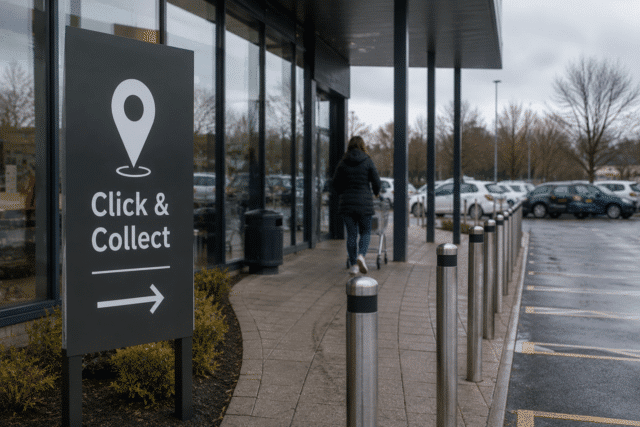
Click & collect grocery operations are often presented as a convenient extension of online retail. Customers place an order digitally, the retailer prepares it, and collection happens later from a supermarket pickup area, curbside lane, locker or external collection point.
Operationally, however, the model changes where temperature-control pressure tends to appear.
Home delivery systems already contain multiple transition points, including staging before loading, route-level exposure and doorstep waiting time. Grocery click & collect does not suddenly introduce operational fragmentation into the cold chain. What changes is how that fragmentation is distributed and who remains responsible once the order enters the collection phase.
In many home-delivery operations, the retailer or logistics provider retains relatively direct operational control until final handover. In click & collect environments, part of that control shifts toward the collection interface itself.
That distinction matters operationally.
Once an order has been picked, consolidated and prepared for collection, products may pass through several intermediate stages before retrieval takes place. Orders can move between refrigerated storage, staging zones, temporary holding areas and collection infrastructure depending on the operational model being used.
This becomes particularly relevant during periods of high collection density, where staging turnover, repeated retrieval activity and customer arrival variability begin interacting simultaneously.
Most grocery operations already deploy refrigerated infrastructure effectively under normal operating conditions. However, maintaining temperature stability becomes more difficult once orders move repeatedly between staging, retrieval and collection environments.
The challenge is not limited to refrigeration capacity itself. In many grocery operations, pressure appears in the operational layer surrounding the order once fulfilment has already been completed.
Why click & collect creates different exposure patterns from home delivery
The main operational difference between home delivery and click & collect is not necessarily transport duration. It is the way customer timing interacts with fulfilment operations.
In home delivery, routes, delivery windows and sequencing are largely managed internally by the retailer or logistics operator. In click & collect, customer arrival becomes part of the operating environment itself.
That changes how exposure accumulates operationally.
A collection point may perform smoothly during low-demand periods and behave very differently once multiple retrieval windows begin overlapping. During evening peaks, store teams may simultaneously manage:
- delayed customer arrivals
- frozen and chilled retrievals from the same holding area
- curbside loading activity
- staging congestion
- repeated opening of refrigerated storage
- reprioritisation of orders waiting for collection
None of these situations necessarily represents a major failure individually. Problems usually emerge when several small interruptions overlap around the same operational flow.
A five-minute retrieval delay may affect staging availability for the next collection wave. Repeated access to the same chilled holding area may increase handling frequency during already congested periods. Under peak conditions, relatively minor process deviations can accumulate quickly.
This is one reason many grocery cold-chain incidents originate less from catastrophic equipment failure and more from process variability, sequencing pressure and unclear operational ownership between fulfilment and collection.
Not all click & collect models create the same cold-chain conditions
One reason the topic has become more operationally complex is that “click & collect” now includes several different fulfilment and collection models. From a temperature-control perspective, these environments do not behave in the same way.
Staff-assisted supermarket pickup
Staff-assisted supermarket collection remains one of the most operationally supervised models. Orders are typically stored within existing refrigerated infrastructure until the customer arrives, and handover takes place directly through store personnel.
This gives retailers relatively strong visibility over collection timing, staging sequence, delayed retrievals, frozen/chilled separation and exception handling.
However, pressure can still build quickly during peak periods. In-store picking environments may experience additional congestion because fulfilment activity shares physical space with customer traffic and collection operations simultaneously.
During evening collection surges, teams may repeatedly reopen the same refrigerated holding area while coordinating curbside retrievals, late arrivals and mixed grocery baskets at the same time.
Curbside grocery pickup
Curbside collection introduces a different operational profile because products temporarily leave the controlled store environment before final handover is completed.
Orders are often staged shortly before customer arrival and transferred externally during loading. Exposure pressure may increase during outdoor waiting periods, repeated movement between staging and vehicles, weather variability, collection surges and customer arrival delays.
These systems can improve customer convenience and reduce in-store congestion, but they also create additional operational activity around the pickup interface itself.
Refrigerated lockers and unattended collection
Refrigerated lockers introduce another type of operational challenge. Importantly, many commercially deployed locker systems maintain actively controlled temperature conditions effectively under normal operating scenarios.
The issue is therefore not simply whether refrigeration exists inside the locker.
Temperature stability may also depend on how retrieval timing, repeated access and transfer conditions are managed around the collection process itself.
Operational pressure tends to appear in delayed retrievals, overflow situations, repeated access during peak periods, maintenance consistency, exception management and reduced operational visibility once the order enters an unattended environment.
A locker network designed around fast turnover may behave differently when retrieval windows begin overlapping or collection behaviour becomes less predictable. This is particularly relevant during seasonal peaks, heat events or periods of unusually high order density.
External collection hubs
Some grocery operations also use external collection hubs separated from the fulfilment location itself. These models may involve additional transfers between preparation, transport and retrieval infrastructure.
The operational challenge in these environments often comes less from distance itself and more from the number of transitions surrounding the order journey. Each additional handover introduces more sequencing dependency, more staging coordination,
more waiting variability and more opportunities for exposure during transfer.
Exposure profiles may also differ depending on whether orders originate from in-store picking, micro-fulfilment operations or dedicated dark-store environments.
The collection layer is becoming one of the most operationally sensitive parts of grocery last mile
Temperature-control discussions in grocery logistics still focus heavily on transport performance. Yet in click & collect systems, some of the most operationally fragile moments now occur after fulfilment and before final customer retrieval.
This intermediate layer includes staging before collection, temporary holding periods, curbside retrieval, locker placement, customer waiting time, repeated access to refrigerated areas, delayed-order reorganisation and mixed-basket handling during peak periods.
In many operations, these environments remain stable during average demand conditions. The pressure usually appears when timing variability, staffing constraints and collection density begin interacting simultaneously.
For example, a short retrieval delay during a high-volume evening collection window may force teams to reorganise staging areas repeatedly while maintaining frozen/chilled separation across multiple outstanding orders.
At that point, the collection layer stops functioning as a simple handover step. It becomes an active operational environment with its own thermal pressure, sequencing requirements and coordination constraints.
From vehicle-level control to order-level exposure management
Traditional grocery cold chains were historically designed around the vehicle. Refrigerated transport acted as the primary controlled environment, and operational planning focused heavily on route duration, delivery windows and fleet utilisation.
Click & collect shifts part of that logic toward order-level exposure management.
Once orders are prepared individually and distributed across different collection formats, temperature stability increasingly depends on how the order behaves between fulfilment completion and customer retrieval.
That changes the operational importance of decisions such as where orders wait before collection, how mixed baskets are segmented, when products are consolidated, how frequently holding areas are accessed, how delayed retrievals are handled and how exposure is limited during repeated staging activity.
In these fragmented collection environments, temperature-controlled packaging can also function as an operational control layer by helping reduce repeated exposure during staging, retrieval and handover activity.
For example, limiting repeated access to temperature-sensitive products during busy collection periods may help stabilise handling conditions when teams are managing several overlapping retrieval flows simultaneously.
This does not replace active refrigeration, which remains essential across many grocery logistics operations. However, fragmented collection environments increasingly require complementary layers of temperature protection and operational flexibility during staging, waiting and retrieval phases where exposure becomes harder to control consistently.
Peak conditions reveal where the system starts losing stability
Many click & collect operations function effectively during average demand periods. The real operational test appears when multiple sources of variability affect the collection system simultaneously.
Typical stress conditions include summer heat, evening retrieval surges, holiday demand peaks, reduced staging availability, delayed collections, staffing shortages, high locker turnover and congestion around pickup zones.
Under these conditions, operational pressure and thermal exposure tend to intensify together.
A delayed customer arrival may reduce staging availability for subsequent retrieval waves. Congested collection areas may increase handling frequency. Repeated movement between holding zones and pickup lanes may create additional exposure during already constrained periods.
These situations rarely originate from a single operational breakdown. More often, they emerge gradually through the accumulation of small process deviations across the fulfilment-to-collection sequence.
This is why many grocery operations are increasingly designing around variability rather than average conditions alone.
The collection point is now part of the cold chain itself
As click & collect continues expanding across grocery retail, the collection interface is becoming a more operationally critical part of the cold chain than many systems were originally designed for.
The collection point is no longer simply the final step after fulfilment. It has become an active operational layer where customer timing, staging pressure, retrieval sequencing and temperature management intersect directly.
That includes decisions around collection-window design, staging capacity, retrieval sequencing, mixed-basket organisation, delayed-order handling, unattended collection limits and customer-arrival variability.
In many grocery operations, the operational challenge is no longer limited to maintaining controlled temperatures during transport alone. Increasingly, resilience depends on how consistently the system manages temperature exposure during the periods between preparation, waiting, retrieval and final handover — and on whether the operation is designed to absorb variability or only to perform under ideal conditions.